
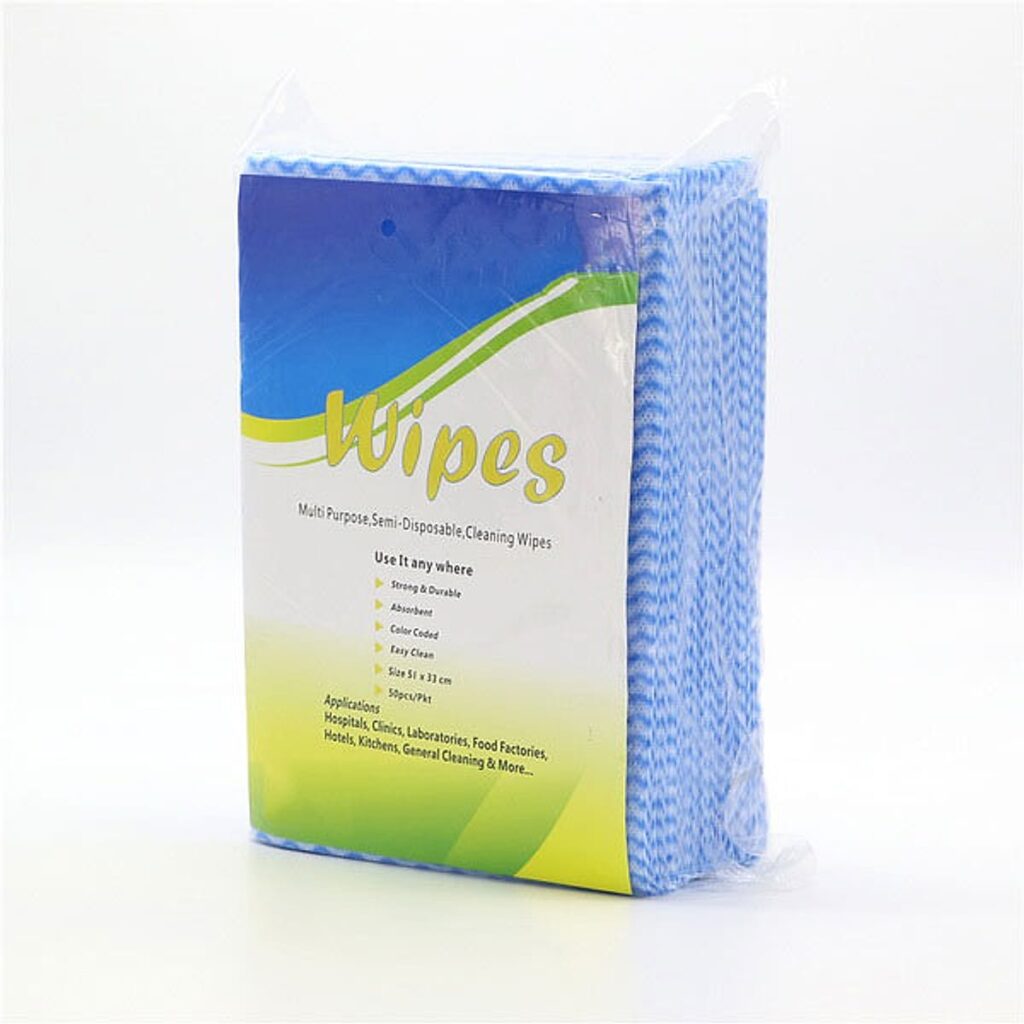
The choice between spunlace vs airlaid comes down to what the wipe has to do. Choose spunlace for softness-critical wet wipes (baby care, facial, sensitive skin); choose airlaid for dry products and flushable absorbency; choose SMS for strength and barrier applications such as industrial wipes and masks. GSM, cost and claim requirements then fine-tune the decision.
The nonwoven fabric inside a wipe determines how it feels, how much it absorbs, how strong it stays when wet, and how much it costs per sheet. Brands that skip the material decision and let the factory default to “whatever we have” usually regret it at the first consumer complaint — or at the first cost review.
This guide explains what spunlace, airlaid and SMS actually are, how they compare, and how to pick the right one for your product category, using the fabric options we run across daily at NINGBO RIWAY NONWOVENS TECH CO., LTD.
What are spunlace, airlaid and SMS nonwovens?
Spunlace (hydroentangled) — fibers are entangled by high-pressure water jets into a soft, drapable, fabric-like sheet. It is the workhorse of wet wipes: baby wipes, facial wipes, household cleaning wipes. Spunlace can be made from viscose, polyester, cotton, bamboo or blends, which is why it supports “plant-based” and biodegradable claims.
Airlaid — fibers are formed into a dry web with air and bonded with latex or thermal binders. Airlaid is bulky, highly absorbent and lint-free, making it ideal for dry products, feminine care and some flushable formats.
SMS (spunbond-meltblown-spunbond) — a layered structure (typically polypropylene) where meltblown layers provide a filtration barrier and spunbond layers provide strength. SMS is the standard for face masks, surgical drapes and heavy-duty industrial/medical wipes where strength and barrier matter more than softness.
Spunlace vs Airlaid vs SMS: comparison table
| Property | Spunlace | Airlaid | SMS |
|---|---|---|---|
| — | — | — | — |
| Softness | ★★★★★ | ★★★☆ | ★★☆ |
| Wet strength | ★★★★ | ★★★☆ | ★★★★★ |
| Absorbency | ★★★★ | ★★★★★ | ★★★☆ |
| Lint / fiber release | Low | Very low | Low |
| Barrier / filtration | Low | Low | High |
| Material options | Viscose, PET, cotton, bamboo, blends | Pulp + binders (latex/thermal) | PP (mostly) |
| Typical use | Baby, facial, household wipes | Dry wipes, femcare, flushable | Masks, medical, industrial |
| Relative cost | Medium | Medium-high | Low-medium |
| GSM range | 30–80 gsm common | 40–100 gsm common | 20–60 gsm common |
How to choose for baby wipes
Baby wipes are the most scrutinized product in the category. Prioritize softness and gentleness: spunlace in a viscose/cotton or bamboo blend at 40–55 gsm is the industry standard. Avoid SMS — its synthetic feel and lower softness are wrong for newborn skin. If you are claiming “plant-based” or “biodegradable”, confirm the fiber content and certification path (e.g. FSC-certified pulp, biodegradable binder systems) with your manufacturer before committing to the claim.
How to choose for flushable wipes
Flushable products need dispersibility — the fabric must break apart in the sewer system. Airlaid (pulp-based) is the common starting point, but the binding system matters more than the fabric name: water-dispersible binders and compliance with GD4 / IWSFG testing standards are what make a wipe truly flushable. Do not let a supplier call a wipe “flushable” without the test report.
How to choose for antibacterial and surface wipes
Surface and disinfecting wipes need enough wet strength to survive aggressive scrubbing and enough absorbency to hold the solution. Spunlace (polyester/viscose blend at 45–65 gsm) is the default; for heavy-duty industrial use, an SMS-reinforced structure adds scrub resistance. Also check compatibility between the fabric and your active chemistry (quats, alcohol, hypochlorite) — some chemistries degrade certain fibers.
How to choose for dry wipes and towels
Dry wipes, towels and cloths value bulk, absorbency and lint-freeness: airlaid delivers these best. For premium facial towels, a high-GSM spunlace with embossing gives the softness-and-thickness combination consumers expect.
GSM and sheet size: the practical dials
Material type sets the character; GSM and sheet size set the economics:
- Lower GSM (30–40) — cheaper per sheet, thinner feel, faster drying of the lotion. Fine for single-use household wipes.
- Higher GSM (55–80) — premium feel, higher absorbency, higher cost. Expected in baby care and facial segments.
- Sheet size interacts with GSM for the pack price point — a 15 × 20 cm sheet at 50 gsm is a very different product from 20 × 30 cm at 40 gsm.
Your manufacturer should give you a per-sheet cost at three GSM points so you can see the trade-off, not just a single quote.
Cost and MOQ implications
Airlaid tends to cost more per gram than spunlace because the pulp-and-binder system is more expensive than hydroentangling; SMS is usually the cheapest of the three per square meter. MOQs typically scale with packaging format rather than fabric — expect a standard MOQ in the range of 20,000–50,000 packs per SKU, with the packaging minimum as the binding constraint. If a new material is required for your program (for example a bamboo spunlace you have not run before), the factory will need a small trial order for the fabric and a custom sample at 5–10 days lead time.
FAQ
Which nonwoven is best for wet wipes?
For most wet wipes — baby, facial, household, antibacterial — spunlace is the best default: the best softness-to-strength-to-cost balance. Choose airlaid for dry/absorbent products and flushable programs, and SMS only for barrier or heavy-duty applications.
Is spunlace biodegradable?
Spunlace made from viscose, cotton or bamboo is plant-based and can be biodegradable depending on the fiber and finish; polyester-blend spunlace is not. Verify fiber content and certification with your supplier before making the claim.
Can I use the same fabric for wet and dry wipes?
Yes — many manufacturers run the same nonwoven family for both; the difference is finish and lotion add-on. Dry wipes usually use higher-GSM fabric with no lotion, while wet wipes add 2.5–4× fabric weight in solution.
What GSM should baby wipes use?
40–55 gsm is the common range for private-label baby wipes; premium lines go to 55–65 gsm with embossing. Below 40 gsm the wipe starts to feel thin during use.
Do flushable wipes need special fabric?
Yes — pulp-based (airlaid-style) fabric with water-dispersible binders, validated to GD4 / IWSFG standards. “Flushable” claims without the test report are a compliance risk in the EU and US.
How do I get material samples to evaluate?
Request standard samples (about 3 working days) or custom-formula samples (5–10 days) from your manufacturer — test softness, wet strength and absorbency yourself before committing to a GSM and material.
—
*Riway Group (NINGBO RIWAY NONWOVENS TECH CO., LTD.) manufactures wet and dry wipes in spunlace, thermal bonded, SMS and airlaid materials from its ISO 9001/14001/45001, GMP (COSMETIC) and FSC-certified facility in Ningbo, China, serving private-label brands in 75+ countries with 20+ years of OEM/ODM experience.*
How to test spunlace vs airlaid before you commit
Material decisions are cheaper to make before tooling than after. Ask for a sample run on each candidate substrate and compare the same five things:
- Wet strength — does the sheet hold together when the customer pulls it out of the pack?
- Softness and drape — measured by feel at the same GSM, not at different weights.
- Absorbency and release — how much lotion the sheet holds, and how evenly it gives it back.
- Lint — check the surface after wiping dark glass; loose fibre shows up immediately.
- Cost per finished pack — not per tonne of fabric, because the sheet weight interacts with everything else.
Run the same formula and the same count on every sample so the comparison isolates the substrate. Background on nonwoven substrates is published by the industry association EDANA.
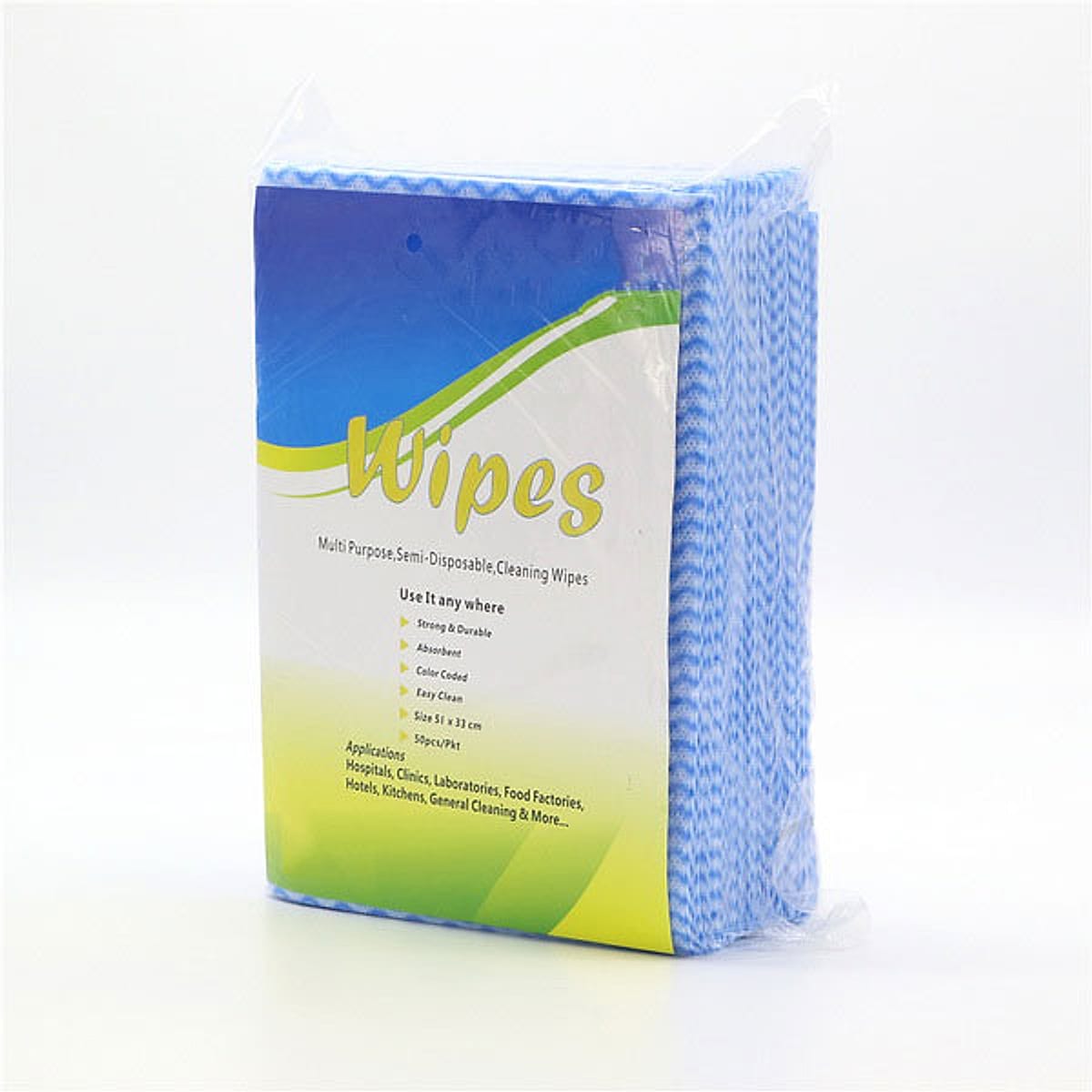
See the categories where these substrates are used most — baby wipes, flushable wipes and industrial wipes — or request material samples.
Practical note: the same spunlace specification from two mills can behave differently, so always approve the material and the finished wipe together. When buyers compare spunlace vs airlaid in a factory trial rather than on a data sheet, the decision usually becomes obvious within one sample pack.