
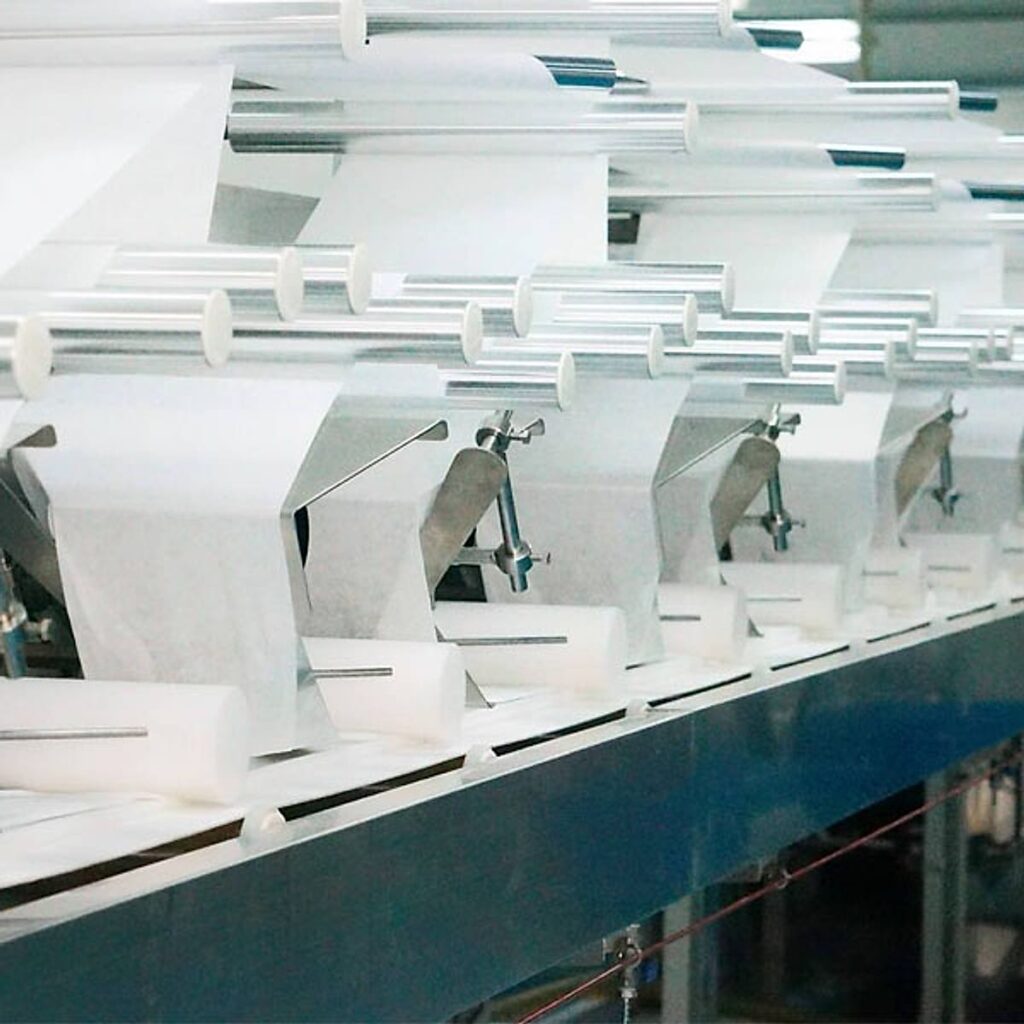
Setting up wet wipes production suppliers is a 6-to-10-week process, not a one-week swap. The safest path is: document your full specification, qualify two to three new factories, validate samples and certificates, run an overlap production period, and only then cut over — with your formula protected by an NDA from day one.
Every brand eventually faces this decision. Prices move, capacity tightens, quality drifts, or your product line outgrows your current partner. Whatever the trigger, a wet wipes supplier switch carries real risk: formula changes, packaging redesigns, shelf-life re-validation, and months of inventory exposure. Done properly, it is a controlled migration. Done casually, it is how brands lose their most profitable SKUs.
At NINGBO RIWAY NONWOVENS TECH CO., LTD., a wet wipes OEM/ODM manufacturer with more than 20 years of production experience, we see the consequences of rushed switches regularly — and we also see what a well-run transition looks like. This guide walks through the six steps that keep your launch calendar intact and your quality standard stable.
Why brands switch wet wipes suppliers
The reasons cluster into four patterns:
- Cost pressure — material, labor or logistics costs push unit price above target.
- Capacity limits — your current factory cannot scale to seasonal peaks or new SKUs.
- Quality drift — repeat defects, batch traceability gaps, or certification lapses.
- Service gaps — slow samples, poor communication, missed lead times.
None of these resolve themselves. But the switching cost is real too: expect 4–6 weeks for sampling and validation, plus another 2–4 weeks for the first production orders — about 6–10 weeks end to end for a typical private-label program.
Step 1: Document your complete specification first
A switch fails when the new factory has to guess. Before contacting anyone, write the full spec for every SKU you plan to move:
- Fabric: material (spunlace, thermal bonded, SMS or airlaid), GSM, width, basis weight tolerance
- Formula: preservative system, active ingredients, pH range, lotion add-on rate
- Sheet: dimensions, folding pattern, perforation, count per pack
- Packaging: format (tub, refill, sachet, flow pack), film structure, sealing spec, label artwork
- Compliance: target market regulations (FDA for US, CPNP/EC 1223/2009 for EU), claims you need to support
- Quality gates: incoming checks, in-process checks, AQL level, COA requirements
This document is your negotiation baseline and your acceptance test. A factory that cannot quote against a written spec is a factory that will surprise you later.
Step 2: Qualify two to three new suppliers
Never move production to a single unproven factory. Shortlist 2–3 candidates against objective criteria:
- Certifications: ISO 9001 (quality), ISO 14001 (environment), GMP for cosmetics, and any category-specific ones (e.g. FSC for paper-based materials)
- Production capacity: number of production lines, annual output, and whether they have dedicated lines for your product type
- Export experience: markets they already ship to, documentation familiarity (FDA establishment registration, EU responsible person)
- Audit posture: do they welcome third-party or customer factory audits?
A manufacturer with 30+ production lines and exports to 75+ countries, for example, has likely handled more compliance regimes than a smaller regional factory — worth weighting in the decision.
Step 3: Validate samples and certificates
Order three things before committing: physical samples, a batch certificate of analysis, and copies of current certifications.
- Standard samples typically arrive in about 3 working days; custom-formula samples take 5–10 days.
- Run the samples through your own QC, not just a visual check — weight, absorbency, wet strength, pH, and microbial limits.
- Verify certificates are current (check issue and expiry dates) and match the legal entity you are contracting with.
Keep a written sample-approval record. It becomes the reference for the first production order and the benchmark for every batch after it.
Step 4: Plan the transition timeline with overlap
The single biggest mistake in supplier switches is a hard cutover. Plan an overlap instead:
| Phase | Duration | Action |
|---|---|---|
| — | — | — |
| Spec + NDA | Week 1 | Sign NDA, send full spec, get written quote |
| Sampling | Weeks 2–3 | Standard/custom samples, QC testing, approval |
| Pilot order | Weeks 4–5 | Small first order (e.g. 10–20% of monthly volume) |
| Overlap production | Weeks 6–9 | Both suppliers run; new factory scales up |
| Cutover | Week 10 | Retire old supplier once 3–4 batches pass consistently |
During overlap, keep the old supplier’s tooling and artwork alive until the new factory has shipped at least three compliant batches. The overlap costs a little extra inventory — it costs far less than a recall.
Step 5: Protect your formula and IP
Your formula is the asset that makes switching possible in the first place. Protect it:
- Sign an NDA and confidentiality agreement before sharing the formula or artwork.
- If you do not want to hand over the formula, use an ODM model: the factory develops and holds the formula under your brand, which also simplifies switching again later.
- Clarify ownership of tooling and molds (packaging films, embossing rollers) in the contract — specify what happens if you terminate.
Step 6: Pilot order, then scale up
Run one pilot order at 10–20% of monthly volume and gate the scale-up on results: batch-to-batch consistency, on-time delivery, and documentation quality (COA with every shipment). Only when three to four consecutive batches meet your spec should you commit full volume.
Also confirm commercial terms in writing: price validity period (typically 90 days for nonwoven materials), lead time, MOQ per SKU, and penalty clauses for late delivery.
How long does a wet wipes supplier switch take?
For a typical private-label program: 6–10 weeks from first contact to full cutover, with sampling (2–3 weeks) and the overlap period (4–6 weeks) as the two fixed anchors. Custom formulas, new packaging development, or target-market registrations can add 2–4 weeks each.
FAQ
How do I choose between a Chinese and a domestic wet wipes manufacturer?
Chinese manufacturers (such as Ningbo Riway) generally offer 30–50% lower unit costs, faster sample turnarounds and full OEM/ODM service, at the price of longer freight and lead time; domestic manufacturers shorten logistics but usually cost more per unit and may have less flexible MOQs. Match the trade-off to your margin and inventory strategy.
What is a typical MOQ for private label wet wipes?
Riway’s standard MOQ ranges from roughly 20,000 to 50,000 packs per SKU depending on format, with flexible first-order terms for new OEM programs. Packaging minimums (per SKU) are usually the binding constraint, not the fabric.
Do I need new certifications when switching suppliers?
Your product registration generally transfers, but the factory must hold the certifications your target markets require (ISO 9001, GMP for cosmetics, FDA establishment registration for the US), and you should re-validate the finished product against your claims — especially for flushable, antibacterial or baby-care claims.
Can the new factory match my current formula exactly?
If you provide the written formula and approve the trial batch, most experienced manufacturers can reproduce it within specification. If you only provide the finished product, expect a formulation redevelopment cycle (2–4 weeks) and re-validation of claims.
What if my old supplier has my tooling and molds?
Check your contract for tooling ownership clauses. Standard practice is to pay for tooling once and own it, or to have the supplier invoice it separately so it can be moved. Start this conversation early — it is a common blocker in the final weeks.
How do I keep my launch date safe during the switch?
Add a 2-week buffer to the worst-case timeline, order packaging and labels early (they have their own minimums and lead times), and lock the pilot order date in writing before you cancel the old supplier.
—
*Riway Group (NINGBO RIWAY NONWOVENS TECH CO., LTD.) is a wet and dry wipes OEM/ODM manufacturer in Ningbo, China, serving private-label brands in more than 75 countries with 20+ years of production experience, ISO 9001/14001/45001, GMP (COSMETIC) and FSC certifications. This guide is based on first-hand production experience — for a spec review or quotation, contact our team.*
Frequently Asked Questions
How long does it take to get samples from Riway?
Standard samples are ready in about 3 working days; custom-formula samples take 5–10 days.
What certifications does Riway hold?
ISO 9001, ISO 14001, ISO 45001, GMP (COSMETIC) and FSC, with a batch certificate of analysis shipped with every order.
How to compare wet wipes production suppliers side by side
Once you have two or three candidates, compare them on the same sheet rather than in separate conversations. The differences that matter are rarely the headline price:
- Substrate range and GSM capability — can they run the material your product needs?
- Line configuration — which pack formats can they produce without a change of tooling?
- Sample cycle time for a standard sample versus a custom formula.
- Certificate coverage — management system, product and chain of custody kept separate.
- Batch record retention and how a complaint is traced back to a production run.
- Overlap capability — whether they can run your first order while the incumbent finishes theirs.
Price the transition, not just the unit: a cheaper supplier with a slower sample cycle usually costs more once your launch date moves. Standards for the substrates themselves are published by the nonwovens association EDANA.
Related reading: what it costs to move — baby wipes OEM/ODM options and dry wipes and towels. Or request a quote for your specification.
Finally, treat the first order with new wet wipes production suppliers as a validation run rather than a launch order. Check the seal, the count, the wet weight and the print against the approved sample, and put the findings in writing before you scale. That single habit is what keeps a supplier switch invisible to your customers.