
Wet wipes packaging options fall into six standard formats, and the one you choose drives your MOQ, your shelf appeal and your per-unit cost. Packaging is the most visible decision in a wipes project. Understanding the formats before you brief a supplier saves weeks of back-and-forth.
Sachet (1–2 sheets per pack)
The single-use sachet is the sampling and hospitality format: hotels, airlines, restaurants, clinics and promotional packs. Each wipe is individually wrapped, which protects moisture and makes it perfect for giveaways and trial programs. The trade-off is cost per wipe and machine efficiency — high-speed sachet lines have significant start-up waste per film roll, so the effective minimum is 100,000–300,000 sheets.
Pocket pack (8–20 sheets per pack)
The pocket pack is the on-the-go format: travel, daily carry, handbag, car glovebox. Small, resealable and cheap to produce, it is a favorite for travel retail and convenience channels. The minimum print weight for color-printed film sets the standard MOQ at 30,000–50,000 packs.
Flowpack with sticker (30–80 sheets per pack)
The classic soft pack with a resealable sticker — the workhorse of baby wipes and personal care wipes at retail. It balances cost, moisture retention and shelf presence. Laminated film plate-making and printing usually needs about 150–200 kg, which translates to a standard MOQ of 20,000–30,000 packs.
Flowpack with lid (60–120 sheets per pack)
The flip-top soft pack is the premium version of the flowpack: a rigid lid that keeps wipes moist over a longer use period, ideal for baby care and sensitive-skin lines. The custom injection-molded lid starts around 30,000 units, putting the standard MOQ at 20,000–30,000 packs.
Canister or tub (70–400 sheets per tub)
The canister is the heavy-duty home format: large counts, one-handed dispensing, premium feel. It dominates household cleaning wipes and adult care wipes in Western retail. Shrink film and label print volume set the minimum at 5,000–10,000 tubs.
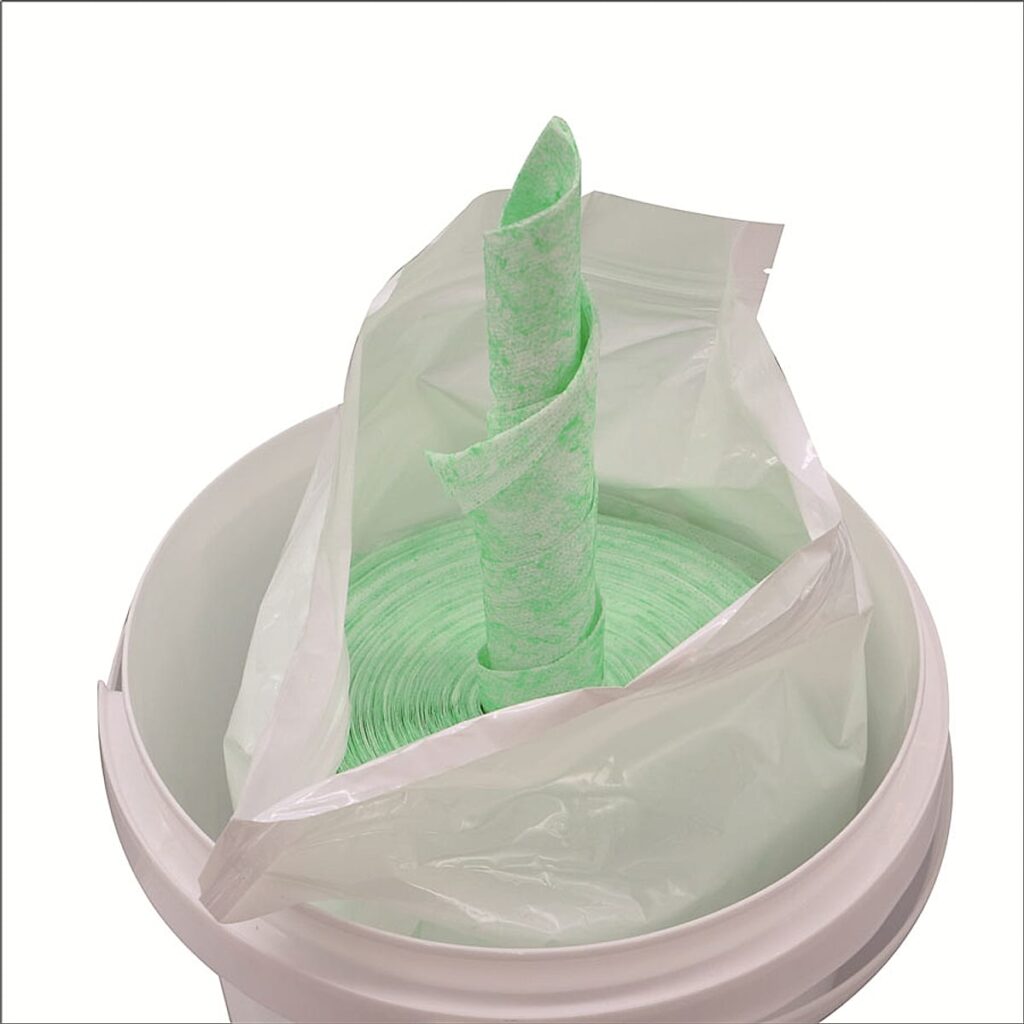
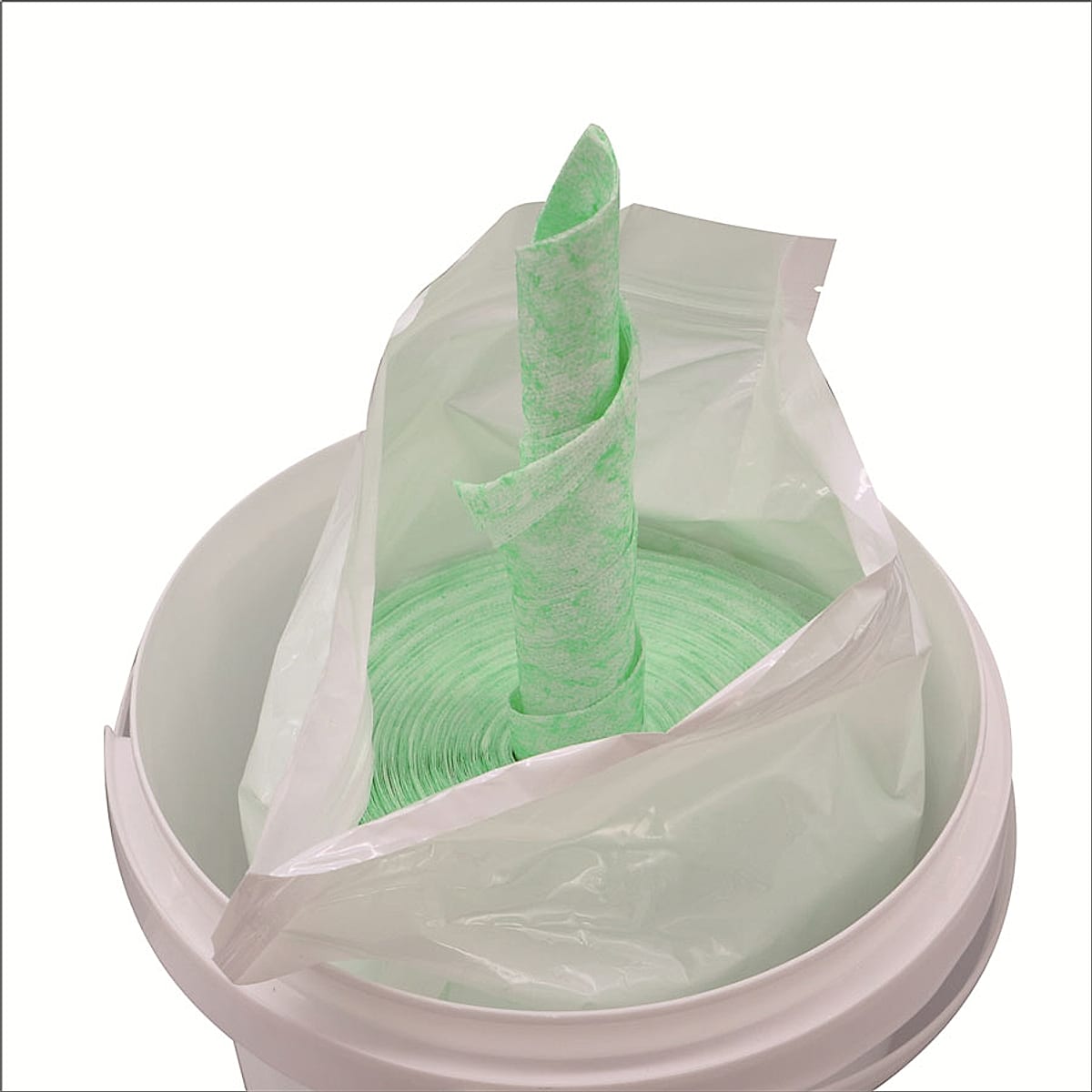
Refill bag (80–100 sheets per pack)
The refill bag is the value and sustainability play: it restocks a canister or tub at a lower cost per wipe and less packaging waste. The format is growing fast with eco-conscious brands. Standard MOQ is 20,000–30,000 packs.
How to choose
Match the format to the channel first: sachet for hospitality and sampling, pocket pack for travel, flowpack for retail multipacks, canister for home, refill for the value tier. Then check the MOQ fits your first order, and confirm sheet count and formula with your supplier. Everything — sheet count from 1 to 2,000 per pack, label design, brand visuals — is customizable at NINGBO RIWAY NONWOVENS TECH CO., LTD.
For the full table with every format’s MOQ and constraint, see our Wet Wipes MOQ & Packaging Guide.
Q: Which packaging format is cheapest to start with?
A: Flowpack with sticker (20,000–30,000 packs) and canister (5,000–10,000 tubs) are common low-entry formats. Sachet has the highest machine start-up waste per film roll.
Q: Can I mix packaging formats in one order?
A: Yes, in most cases — but each format carries its own MOQ and film/print minimums, so confirm the combined volumes with your supplier.
Q: Can you private label any of these formats?
A: Yes — custom labels, artwork, brand visuals and retail-ready packaging are available across all six formats.
Matching wet wipes packaging options to your channel
- Retail shelf — flow pack with a resealable lid for a premium look, or a canister for a larger household count.
- Travel and airline — single sachets or 8-20 sheet pocket packs, where unit cost and pack thickness matter more than sheet size.
- Food service and hospitality — bulk flow packs and individually wrapped sachets with a simple one-colour print.
- Subscription and refill — refill bags in a lower-cost film, with the reusable container sold separately.
- Industrial and workshop — canisters and jumbo rolls, where the pack has to survive a workbench rather than a shelf.
Cost and MOQ across the formats
Print cost is driven by the film, not the wipe: a short run in a special film costs more per pack than a long run in a standard one, which is why the cheapest format to launch with is usually a pocket pack or a single sachet in a standard film. A resealable lid is a fixed tooling cost spread across the order, so it rewards volume rather than small runs. If your first order is a trial, start with a format that reuses existing tooling and move to a bespoke pack once the product has proven itself.
See the full breakdown in the wet wipes MOQ and packaging guide, browse household and industrial wipes, or request a quote with your pack format. Recyclability and certification of the film can be checked with FSC.
Lead time by packaging format
Format affects schedule as much as cost. A single sachet or a standard pocket pack can usually be produced from stock film, so the constraint is the line slot rather than the material. A flow pack with printed film needs artwork approved and film manufactured before production can start, which adds a stage you cannot compress. A canister adds moulding or a lid supply step on top of that.
If a launch date is fixed, choose the format whose lead time you can absorb, then upgrade the packaging in the second order. Changing the pack later is a reprint; changing the launch date is a commercial problem.
Ask your supplier to quote two wet wipes packaging options side by side, including film and tooling, before you commit to artwork. Seeing the formats costed on the same sheet is the fastest way to find the one that fits your price point — and the cheapest place to discover that a lid is not yet justified by your volume.