

Automatic Wet Wipes Production Line — 12 Racks, Full Process (OEM/ODM)
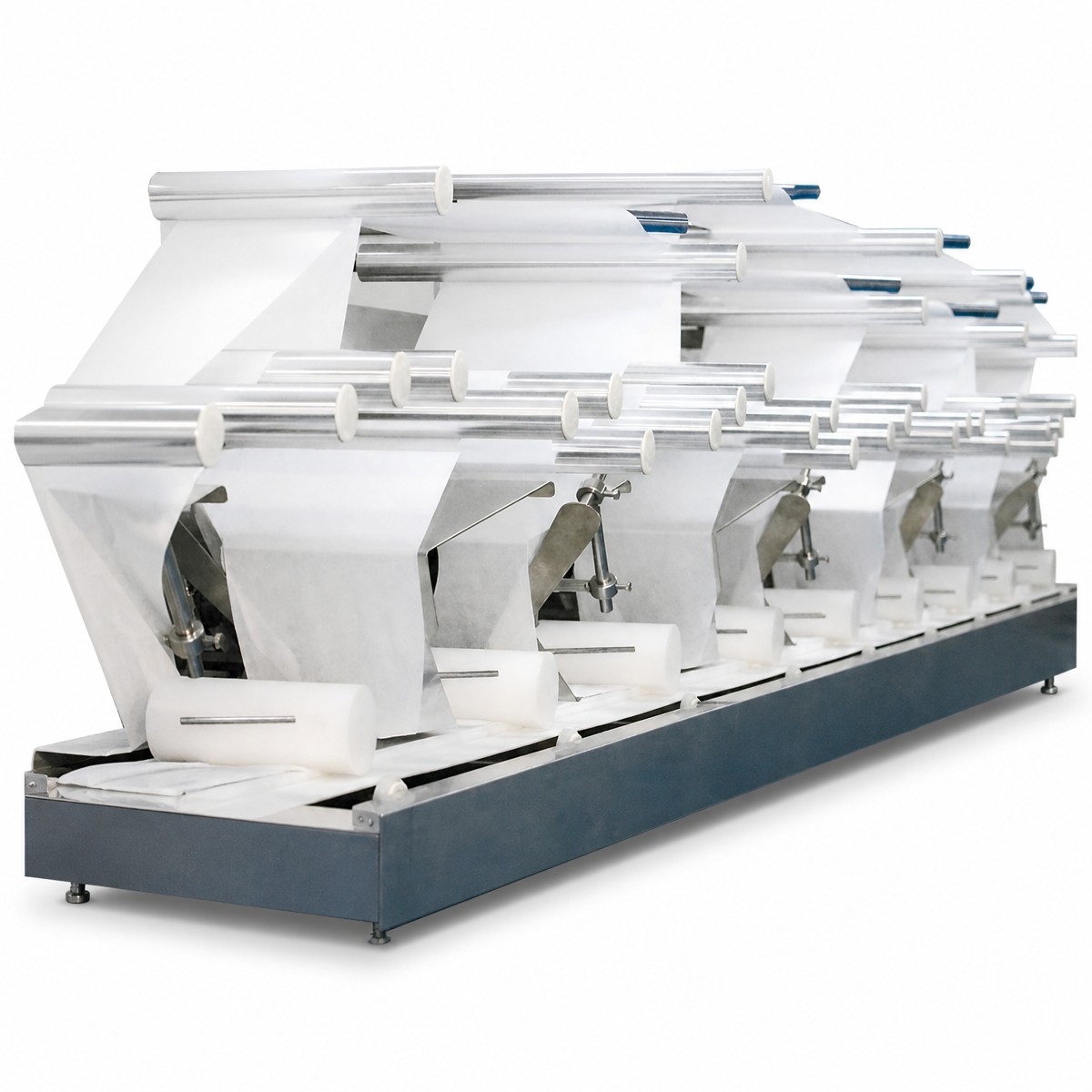
Wet wipes production line with automatic unwinding, folding, transport, humidifying, counting, labeling, packing and heat sealing. It runs 12 racks and takes a mother roll up to 1200 mm across. We supply and set up the line around the wipe you mean to make. We also run the same process ourselves. So the spec comes from people who operate it.
Buying a wet wipes production line is a different call from buying wipes. The line sets your unit cost, your pack formats, your changeover time and the range of products you can quote for in five years. Get the set-up right at spec stage and the investment stays productive. Fix it later and you move steel.
Riway has run nonwoven converting gear in Ningbo, China since 2009. We make wipes, pads and towels for buyers in 75+ countries. That operating experience is what we bring to a line spec. Not a catalogue of machines, but a process that has to end in a saleable pack.
What a Wet Wipes Production Line Does
The line runs one continuous sequence. No operator steps in between stages.
- Unwinding — up to 12 racks feed mother rolls into the process. Roll diameter runs to 1200 mm
- Folding — folding width adjusts across 90–120 mm, in continuous or independent extraction
- Humidifying — quantitative dosing wets the web to a set add-on, not by feel
- Counting — a counting device logs the sheets that make up each pack
- Cutting and stacking — the web is split and stacked to the pack count
- Packing — automatic packing forms and fills the pack
- Heat sealing — the pack is closed and finished
- Labeling — automatic labeling puts the label on the pack
Humidification and counting work to a number, not by hand. So pack weight and pack count hold steady across a shift. That steady output is the point of automation here. The complaint that reaches a supplier is almost never about the wipe itself. It is about a pack that weighed less than the one next to it.
Key Features
- Automatic unwinding — 12 racks, mother roll up to 1200 mm
- Folding width adjustable 90–120 mm; continuous or independent extraction
- Quantitative humidification and counting
- Automatic labeling, packing, folding and heat sealing
- Variable frequency drive — low power use
- Set-up matched to the wipe and pack you mean to sell
Specifications
| Item | Automatic wet wipes production line |
|---|---|
| Racks | 12 sets |
| Mother roll | 1200 mm max diameter |
| Folding width | 90–120 mm adjustable |
| Extraction | Continuous or independent |
| Humidification | Quantitative |
| Counting | Automatic |
| Packing / sealing / labeling | Automatic |
| Drive | Variable frequency motor |
| Samples | Per request |
| MOQ | On request |
Wipe Types the Line Can Produce
The line is not tied to one product. Inside its folding range it covers the formats that make up most of the wet wipes market:
- Baby and sensitive skin wipes in flow-wrap packs and tubs
- Facial, makeup removal and personal-care wipes
- Household, kitchen and bathroom cleaning wipes
- Disinfecting and antibacterial wipes
- Pet care wipes
- Industrial and workshop wipes
- Body and bathing wipes, including larger single-wipe formats
The real limits are the substrate, the wet add-on and the pack format. The label on the pack is not a limit. Describe the wipe and the pack, and the machine spec follows.
Deciding the Line Configuration
Four questions settle most of a wet wipes production line spec. First, the substrate, because web behaviour sets the tension and the folding. Then the wet add-on, because that sets the humidification system. Next the pack: a flow wrap, a tub and a canister each need different downstream gear. Last, how often you change over. A line that swaps products daily differs from one that runs a single SKU for weeks.
Four answers and the rack count, folding width and downstream stations stop being a guess.
Utilities, Cleanroom and Layout
You cannot plan machinery apart from the building it goes into. Buyers normally confirm four things before the spec is frozen. They check the power supply, the compressed air, the water quality and the floor loading. They also confirm whether the line will sit in a controlled room or an open hall. Riway makes its own wipes in a Class 100,000 cleanroom. So we know how to write a spec that suits both the machine and the room around it.
Layout matters for the same reason. Mother roll storage, the unwind position and the packing exit decide how material and finished cartons move through the plant. It is cheaper to plan that on paper than to re-arrange a line that is already bolted down.
Training, Commissioning and Support
We agree scope of supply, installation, commissioning and operator training per project. All of it goes in the quote, so there is no doubt about who does what on site. Because we run the same process ourselves, we can write the handover around the figures that matter. Those are web tension, folding width, wet add-on and pack count. That beats a generic manual.
Spare Parts and Consumables
Wear parts on a wet wipes line cluster in the cutting, sealing and transport sections. We send spare-part lists and advised wear items with the quote. So a buyer can plan stock before the line starts. We name common replacement items by their place in the process, not by an internal part number alone.
Quality Control and Acceptance
We measure acceptance against the pack, not the machine. Before we agree shipment, we write the checks into the spec. Those are pack count, wet add-on, fold width and seal integrity. So acceptance testing has a clear pass mark from the start.
Our own output runs to ISO 9001, ISO 14001 and ISO 45001 management systems, with GMP (COSMETIC) and FSC certification. The details sit on the certificates and reports page. EDANA, the trade body for nonwovens, publishes background on materials and converting.
Certification
ISO 9001 / 14001 / 45001, GMP (COSMETIC) and FSC. A batch certificate of analysis ships with every order.
Frequently Asked Questions
What is the difference between a wet wipes production line and a packing machine? A packing machine forms and fills packs. A wet wipes production line also unwinds, folds, humidifies and counts the web. That is what sets pack weight and pack count.
Can the line run more than one product? Yes. Substrate, wet add-on and pack format set the set-up. The folding range of 90–120 mm covers the common folded-wipe formats.
How many racks are needed? Rack count follows the substrate and the run length. Twelve racks is the set-up on this page. We settle the right number for your project at spec stage.
Is operator training included? We agree scope of supply, commissioning and training per project. All of it goes in the quote.
How do we start? Send the wipe build, the pack format and the target output. We come back with a spec and a quote.