
The main advantage of compressed towels is that a full-size towel travels as a tablet the size of a coin. They are made from nonwoven fibre compressed under pressure, and they expand back to a usable towel the moment they meet water — which is why they have replaced paper towels in camping kits, travel bags, garages and hospitality packs.
What compressed towels are and how they work
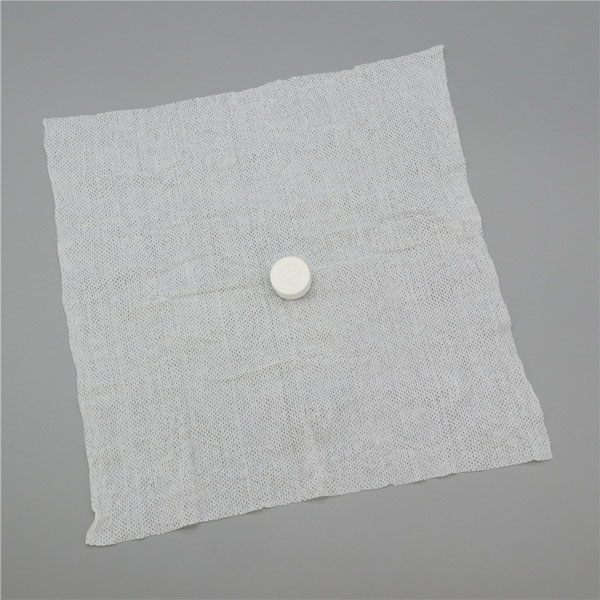
A compressed towel is a sheet of nonwoven fabric, usually viscose, folded and pressed into a small tablet or pellet. Compression removes the air from the fibre, so a towel that would occupy a hand-sized space on the shelf fits into a pocket. Add water and the fibre rehydrates, the tablet unrolls, and the sheet returns to close to its original area. There is no chemical reaction involved — the mechanism is purely physical, which is why the towel can be re-used and then disposed of like any nonwoven sheet.
The advantages of using compressed towels
- Storage and shipping efficiency — a compressed towel takes a fraction of the space of the same towel uncompressed, so more units fit in a carton and a container.
- A genuinely portable format — they carry in a pocket, a glovebox or a rucksack without leaking, tearing or taking up room.
- Hygiene — each towel is used once and opened once, so nothing is carried between uses.
- No waste until it is needed — the towel only becomes wet when the user adds water, which means no drying out in the pack.
- Re-use — the expanded sheet is strong enough to be rinsed and used again, unlike a single-ply paper towel.
- Low unit cost — compression is a converting step on an existing nonwoven line, so the raw material is the main cost rather than the process.
Where compressed towels get used
Compressed towels (sometimes sold as coin tissue) show up wherever water is available but space is not:
- camping, hiking and festival kits, where weight and volume decide what gets carried;
- car and motorcycle cleaning, where a dry tablet can live in the boot for months;
- travel and airline amenity kits, usually paired with a small bottle of water;
- hospitality and restaurant hand-washing stations;
- promotional and corporate gifting, where a printed tablet works as a compact branded item;
- first-aid and outdoor retail, alongside other single-use hygiene items.
How to specify a compressed towel for your brand
Five variables set the finished product and the price: the fibre, the towel size before compression, the compressed shape, the pack count and the packaging. Viscose is the most common fibre because it rehydrates quickly and feels soft against skin; blends can be used to tune strength or cost. The compression shape matters more than it looks — a flat tablet stacks well in a tube, a ball suits a sachet, and a heart or star shape sells better in gift channels. Packaging choices run from a simple printed bag to a rigid tube or a foil sachet, and all of them can carry your artwork.
Because the towel only reaches full size when the customer adds water, the pack can be dry, light and stable — there is no lotion to preserve and no seal to keep intact. That also means the shelf life is limited by the packaging rather than the product, which makes compressed towels one of the simpler items to launch under a new brand.
Frequently asked questions
How much bigger does a compressed towel get?
A compressed tablet expands to a usable towel once it is placed in water. The exact size depends on the sheet you specify before compression, so the tablet size and the finished towel size are chosen together rather than separately.
Are compressed towels reusable?
Yes. Once expanded, the nonwoven sheet is strong enough to be rinsed and used again, then disposed of normally.
What fibre are they made from?
Viscose is the most common fibre because it rehydrates quickly and feels soft. Blends may be used where a buyer needs a specific balance of strength and cost.
Can compressed towels be private labelled?
Yes — shape, pack count, packaging format and artwork can all be produced under your brand as an OEM or private label order.
See the product specification on our compressed coin tissue page, or the wider dry wipes, towels and masks range. For fibre and chain-of-custody questions, FSC publishes the standards for wood-based material. Or request a quote with your tablet size and pack count.
Packaging formats for compressed towels
The tablet decides the pack. A flat pellet suits a tube or a rigid box because it stacks without wasting space; a ball or a shaped tablet suits a sachet or a printed bag. Pack counts run from a single tablet for promotional use to a bag of 50 for camping retail, and every format can carry your artwork and a barcode for retail sale.
Because nothing inside the pack is wet, there is no seal to maintain and no moisture barrier to specify, which keeps the packaging simple and the unit cost low.
If you are specifying compressed towels for a new range, send the finished towel size you need rather than the tablet size. The two are chosen together, and working backwards from the finished product avoids a mismatch between what the pack promises and what the customer gets. Standard samples are available in 3-5 working days, so the format can be tested before any print run.